Beach Club Furniture: Equipping a Waterfront Site From End to End
Furnishing a beach site is not a furniture order. It is a choreography. The guest walks from the entrance past the bar to a sun bed, moves to a table at midday, disappears into the shade in the afternoon and stays into the evening once the lights come on. Every one of those stations needs different furniture, and together they have to read as one house. Casa Padrino equips beach clubs, beach bars, hotel beaches and resort pools completely, from shade through seating to lighting.
The difference between a stocked surface and a place guests return to is rarely the budget. It is whether the fit out was thought through as a whole. An operator who buys parasols in spring, lounge furniture in summer and lights in autumn ends up with four colour worlds on one site. An operator who plans once and then implements in stages gets a coherent picture for the same money.
As an international supplier of luxury furniture with long experience in hotel furnishing, we accompany such projects from the first layout to delivery, across Europe and well beyond.
The Seven Zones of a Beach Site
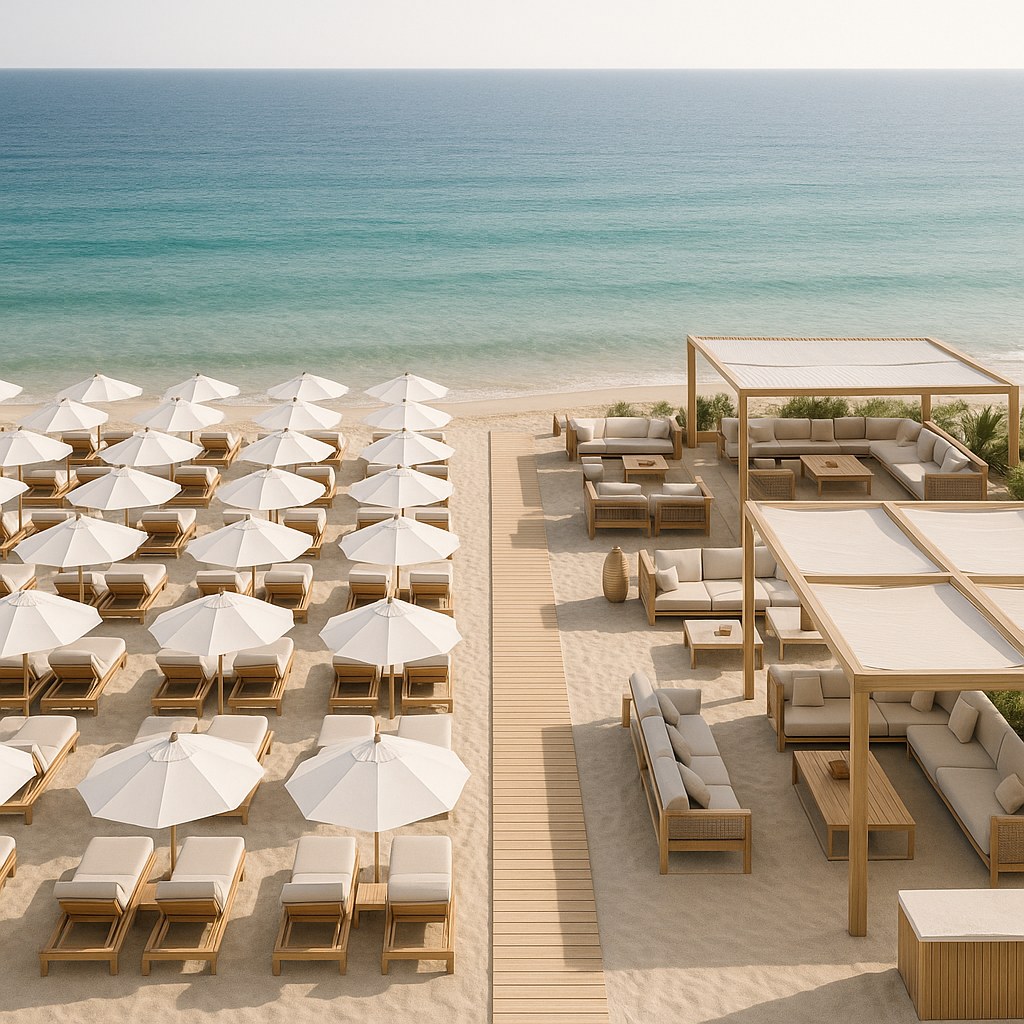
Every site, whether thirty beds or three hundred, breaks down into the same zones. Working through them one by one means nothing is forgotten and nothing is bought twice:
- Arrival: the path from road or promenade to the sand, with reception, signage and the first impression that sets the tone
- Sun bed field: the rows of beds and parasols, the core business and the largest area
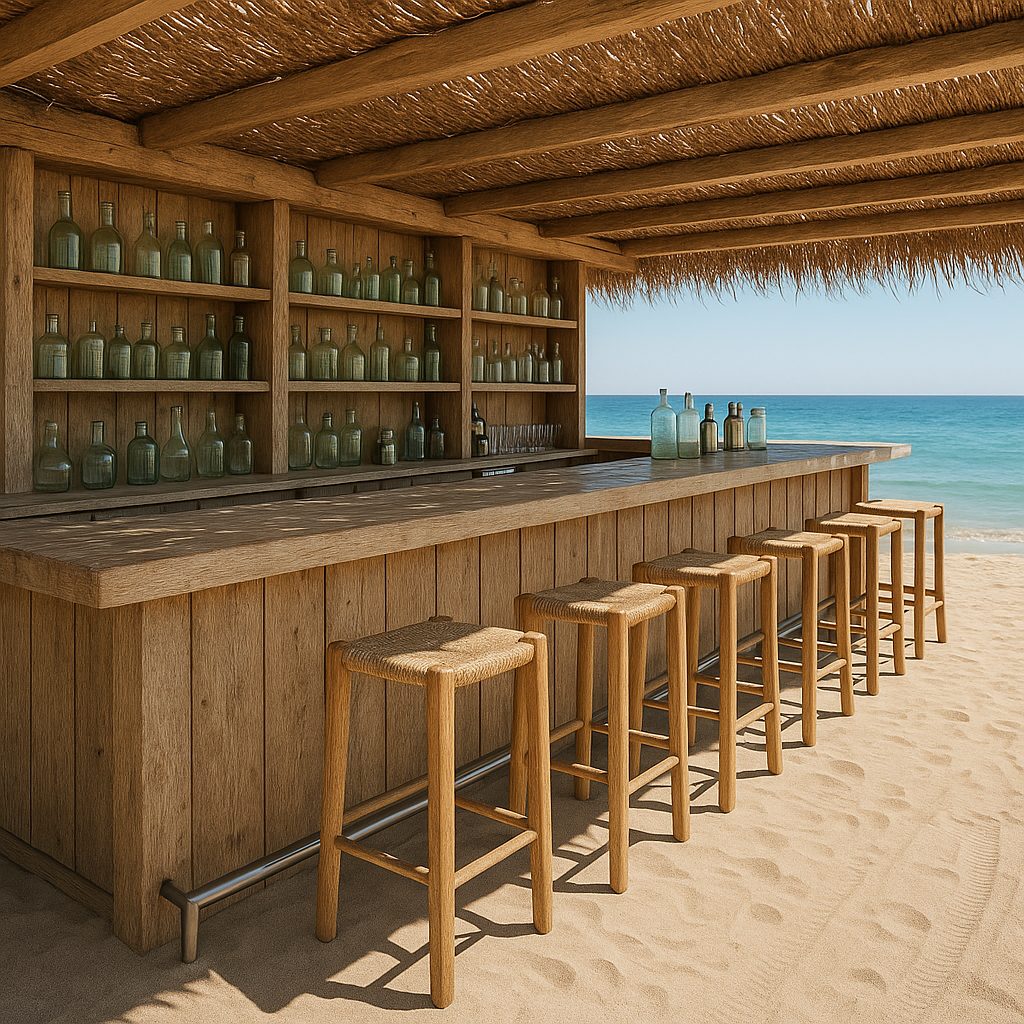
- Bar: counter, stools and standing space, the highest revenue per square metre on the site
- Restaurant: shaded tables, chairs and benches for lunch and dinner service
- Lounge: deep seating groups for guests who stay for hours and order drinks rather than swim
- Sheltered areas: pavilions and cabanas as bookable retreats for families and groups
- Evening: lighting, warmth and wind protection so the site keeps working after sunset
The order is not a ranking. It is the direction the guest walks, and planning should follow exactly that sequence, because each zone prepares the next.
Shade: the Largest Item and the Most Visible
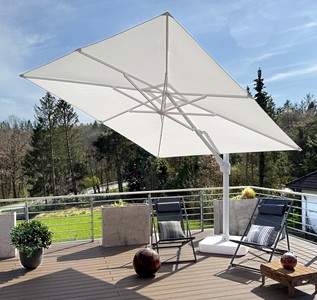
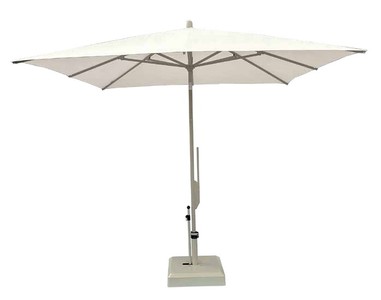
Shade defines the appearance of the whole site because it is visible from furthest away and occupies the largest area. It also determines how many bed spaces are rentable at all, since a bed without shade stands empty from eleven in the morning. For the choice of shape, size, fabric, base and colour we have a dedicated page: beach club parasols covers wind safety, anchoring in sand and the question of house colour in detail.
For overall planning, three rules of thumb are enough. One parasol shades two sun beds, four in the front row and in lounge areas. Spacing between poles runs at roughly one and a half times the canopy diameter so open canopies do not touch. And the canopy edge has to clear head height wherever guests and staff walk between rows.
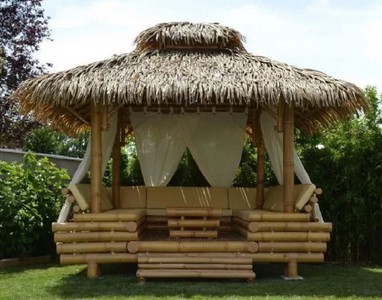
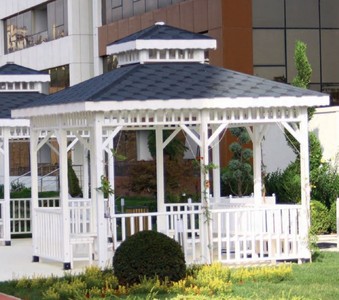
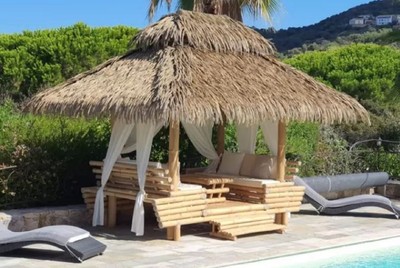
Alongside parasols, many sites work with fixed structures. Pavilions and garden houses give all day shade, hold in wind and can be sold as a product in their own right. How that becomes a business model is set out on our page about the beach cabana.
Sitting and Lying: Where the Time Is Spent
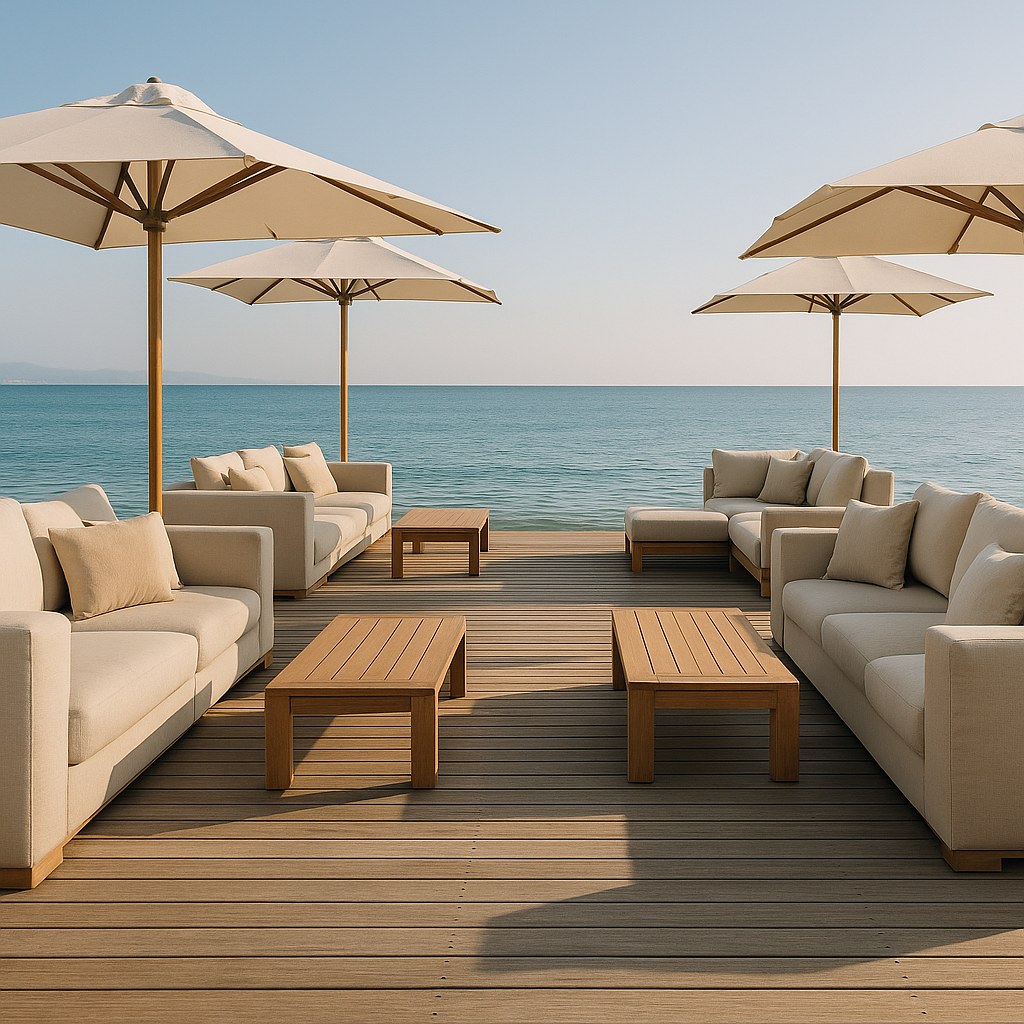
Between the bed field and the bar sits the area that decides length of stay. A guest who sits comfortably orders again. Deep outdoor sofas, wide armchairs and low tables turn a thoroughfare into a place to be, and that is where the revenue arises that does not depend on the weather.
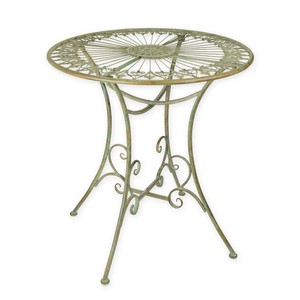
Our luxury garden furniture and the solid wood lounge range are built for permanent outdoor use. Which materials genuinely last by the sea, and how groups should be arranged so they get used rather than rearranged, is covered on the page about beach bar lounge furniture.
For the relaxed part of the site, hammocks and hanging swings are worth adding. They take almost no floor space, appear in every guest photograph and give a site an immediate character of its own.
The Evening: a Second Shift on the Same Surface
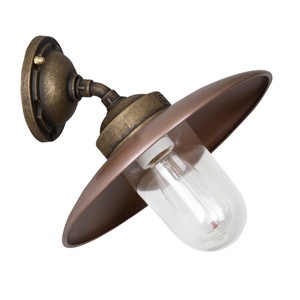
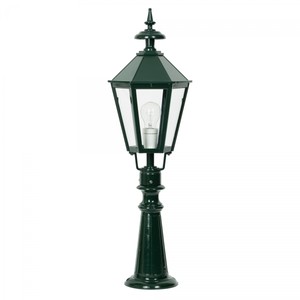
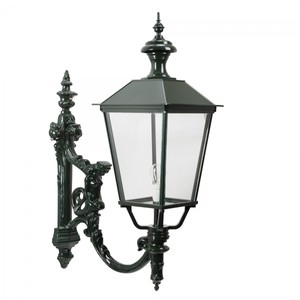
A beach site that closes at six gives away half its potential. The evening is a second shift, and it needs only three things: light, warmth and shelter from wind. Garden and terrace lights mark paths, stage the bar and turn the bed field into a backdrop. Terrace stoves and fire bowls keep guests in place on cool evenings.
How a lighting scheme on a beach is built without glare and without drawing insects is set out on our page about beach club lighting. The most important point in advance: light belongs low and at the edges, never in the eyes of a seated guest.
Planting and Zoning Without Building
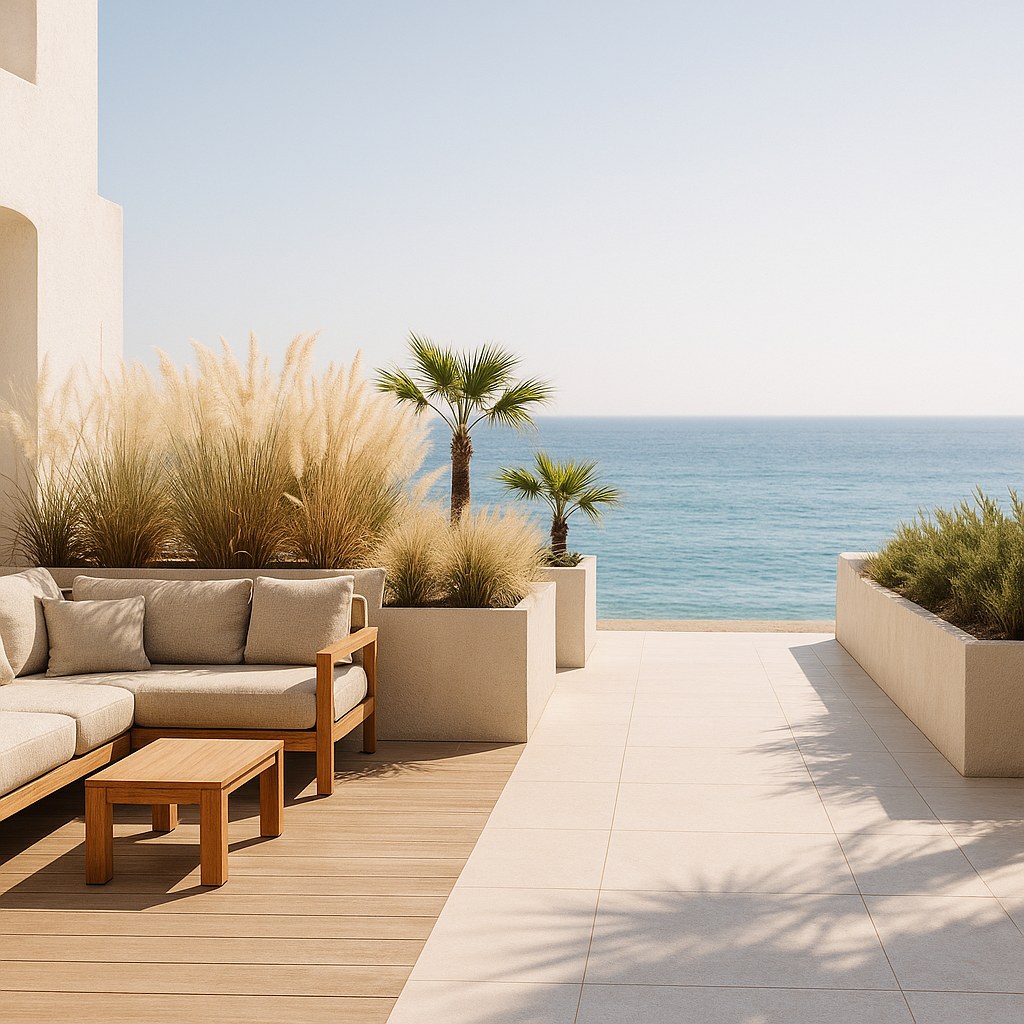
An open beach surface quickly reads like a car park once the sun is gone. Large planters solve that more elegantly than any barrier: they separate zones, guide guests, break the wind and can be moved whenever the layout changes. Because they are movable they need no permit and no intervention in the ground.
Sculptures at the entrance or by the bar serve the same purpose. A single large piece gives a site a name guests pass on, and costs less than a rebuild. For a more formal arrival, a fountain in the reception area covers the traffic noise of the promenade with the sound of water.
Materials That Hold Up by the Sea
Salt air is the hardest test for outdoor furniture, harder than rain and harder than frost. It creeps into every fixing, attacks fittings and makes poor alloys bloom within a single season. What has proven itself: teak and other oil rich hardwoods, solid oak with an open surface, powder coated aluminium, stainless steel in a marine grade, and fibre cement or natural stone for planters.
Equally important is what happens when something does break. Contract furniture should come apart, covers should be individually reorderable, and fittings should be standard parts. An armchair where a torn seam costs the whole armchair is expensive even when it was cheap.
Fitting Out in Stages Without Breaking the Picture
Very few sites are refitted completely in one go. The normal route runs across several seasons, and it works if three things are fixed at the start and then held: the colour world, the material family and the build height. Everything else can grow.
In practice that means shade first, because it sets the picture and secures revenue per bed. Then seating, because it extends length of stay. Then light and warmth, because they extend opening hours. Planting and decoration last, because they are the cheapest to retrofit. Reverse the order and you end up with a pretty site that has too little shade.
End of Season: Storage Is Part of the Plan
Every piece on a seasonal beach gets cleared in autumn, and that work returns every year. It should therefore be considered at the point of purchase. Stackable chairs, folding beds, split parasol poles and bases on wheels save more over ten years than any discount at purchase.
The second point is the storage location. Furniture stored damp comes back in spring with mildew stains. A night of drying before it goes in, and pallets rather than a concrete floor, extend service life considerably and cost nothing.
Casa Padrino as a Supplier for Waterfront Businesses
Casa Padrino is among the large European suppliers of high quality furniture and has furnished hotels, villas and hospitality projects for many years. For beach businesses we combine the range available from stock with project manufacture, where quantity, colour and dimension are specified. We deliver internationally, work with architects and interior design studios, and prepare contract quotations individually from site and quantity.
The complete outdoor range, from parasols to garden furniture and decoration, can be found at https://www.casa-padrino.de/en
Frequently Asked Questions About Beach Club Furniture
Where do you start with a new beach site?
With shade. It determines how many bed spaces are rentable, it shapes the appearance most strongly, and it has the longest lead time once special colours are involved. Seating, lighting and decoration can be added later without harming the overall picture, as long as colour world and material family are fixed from the beginning.
How much area does one sun bed space need?
As a guide, six to eight square metres per bed space including circulation, and considerably more in premium sites. Two beds and a side table under one parasol need roughly twelve to sixteen square metres. Sites planned tighter feel crowded and are harder to rent at higher rates.
Which materials genuinely last by the sea?
Teak and other oil rich hardwoods, solid oak, powder coated aluminium, marine grade stainless steel, and fibre cement or natural stone for planters. The fittings are decisive: salt air attacks screws, joints and rivets first. Furniture whose connections are plain steel looks old after one season regardless of the quality of the seat.
Can a site be extended over several years?
Yes, and that is the normal case. It requires three decisions taken at the start and then left alone: one colour world, one material family and one build height. Hold those three and you can reorder every season without the surface looking patched together.
How do you zone a surface without building?
With large planters, with sculptures and with the arrangement of the furniture itself. Movable elements need no permit, do not intervene in the ground and can be repositioned between seasons if the concept changes. Fixed installations should only go where they are genuinely necessary.
What is worth having for evening trading?
Light, warmth and wind protection, in that order. Light makes the surface usable at all, heat sources keep guests in place on cool evenings, and on many coasts a windbreak decides whether anyone sits outside after dark. Together they extend the usable hours of a site considerably.
Can furniture and parasols be colour matched?
Yes, and it is the difference between a stocked surface and a designed one. It makes sense to fix the house colour once and align every trade to it. Since colour tones from different manufacturers rarely match exactly, related items should be ordered together.
How long does delivery of a complete fit out take?
Stock items are available at short notice, project manufacture in special colours or dimensions takes several weeks. For a site that has to stand for the season opening, the right time to order is winter. Reordering in the middle of peak season is the most expensive and slowest route.
What matters when storing over winter?
Store everything dry, on pallets rather than directly on concrete, and let it dry out for a night first. Cushions and fabrics stored damp come back with mildew stains in spring. Choosing stackable, folding and demountable models at the point of purchase saves labour and storage space every year.
Does Casa Padrino deliver internationally?
Yes. We deliver worldwide and have experience with projects across the Mediterranean, in Northern Europe, the Gulf region and beyond. Furniture for beach sites is freight goods and delivery is kerbside, so access, unloading point and interim storage should be settled before the delivery date.